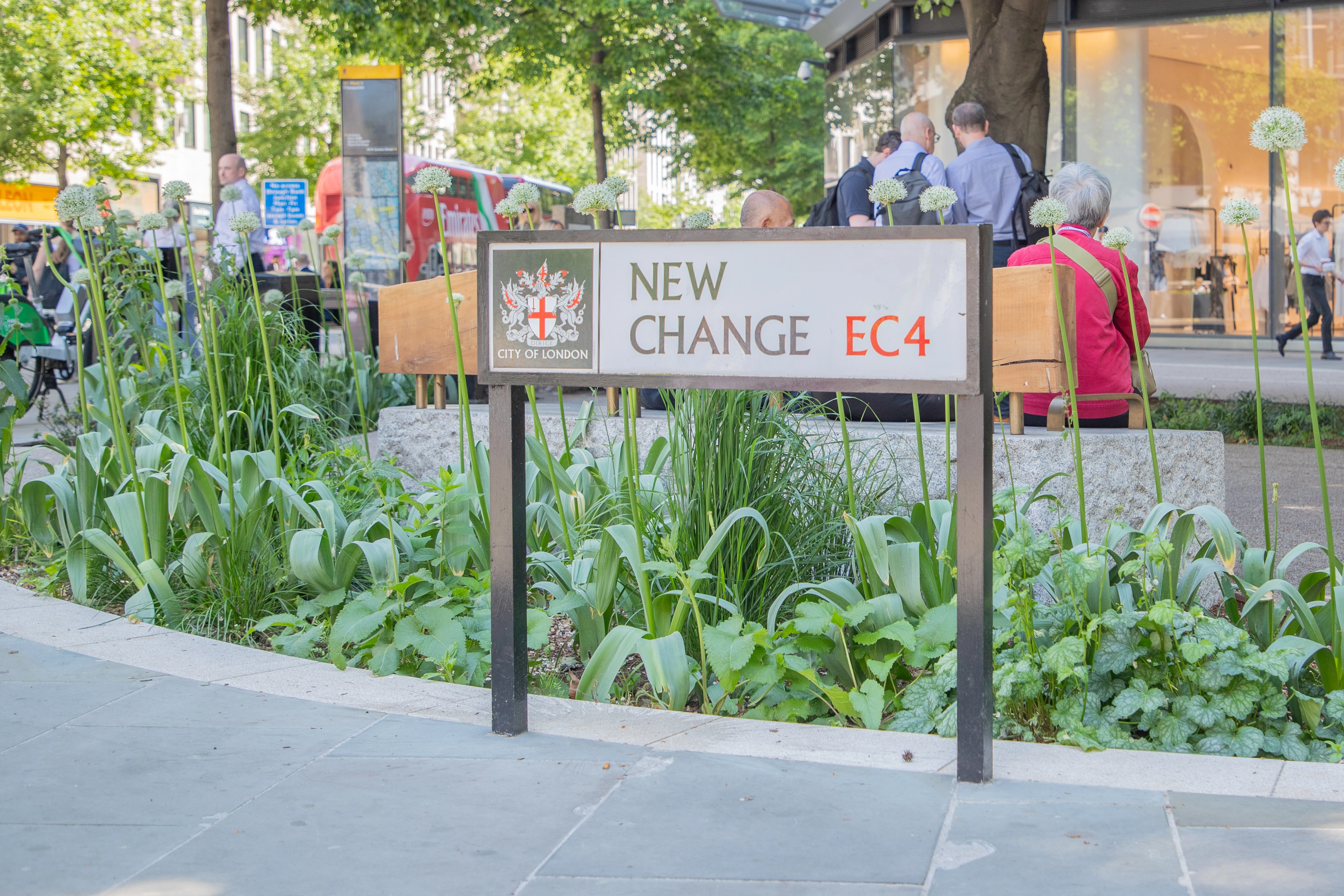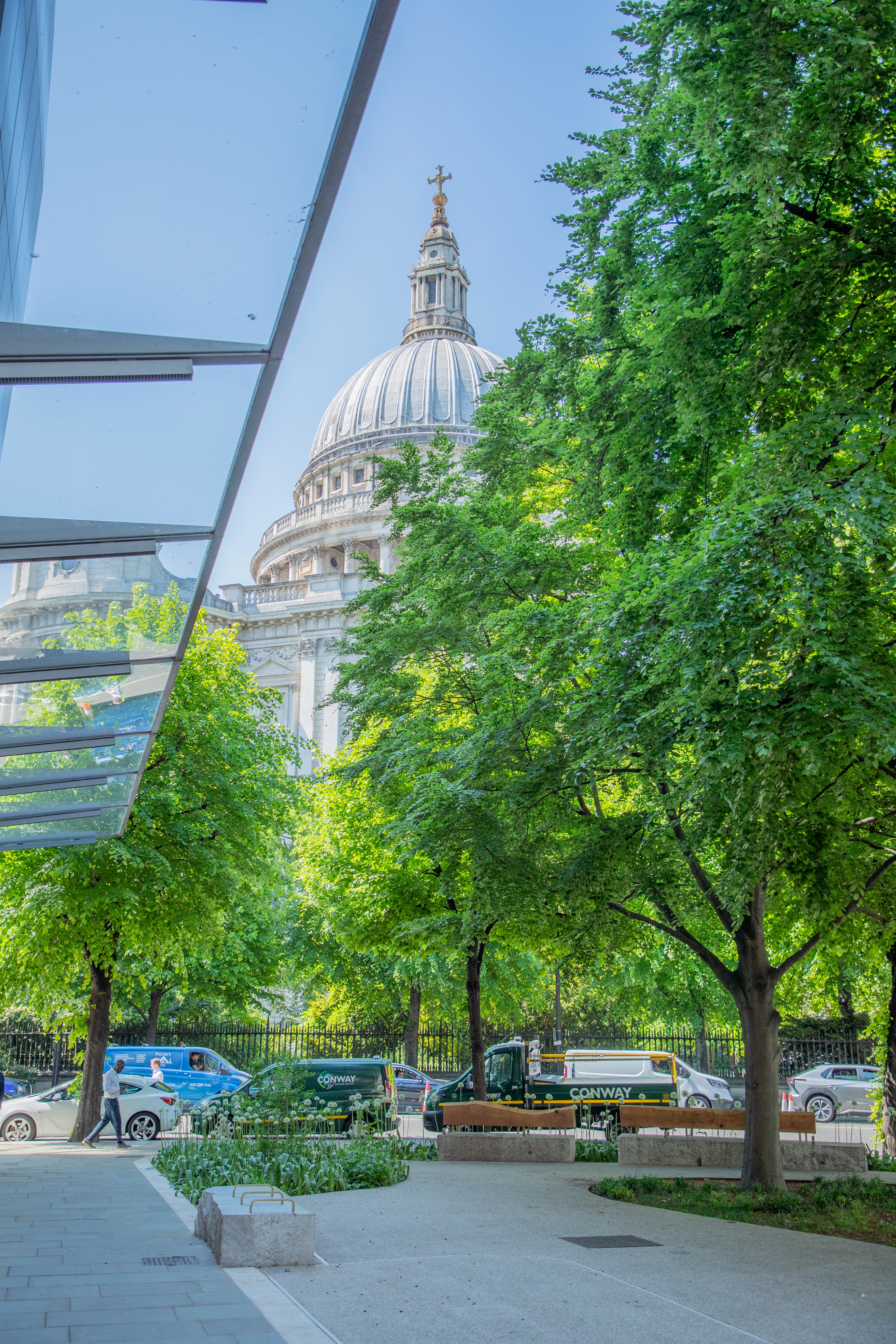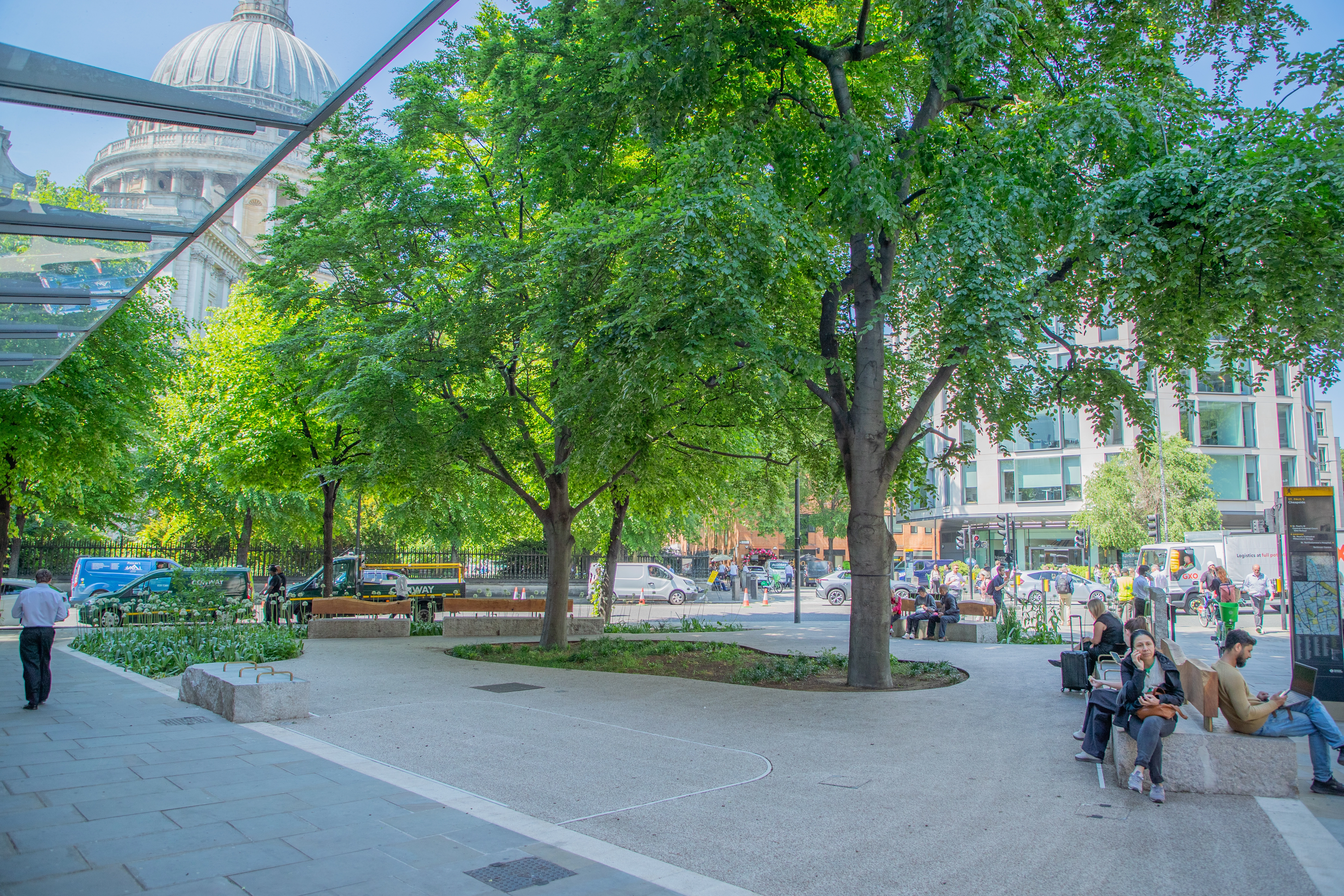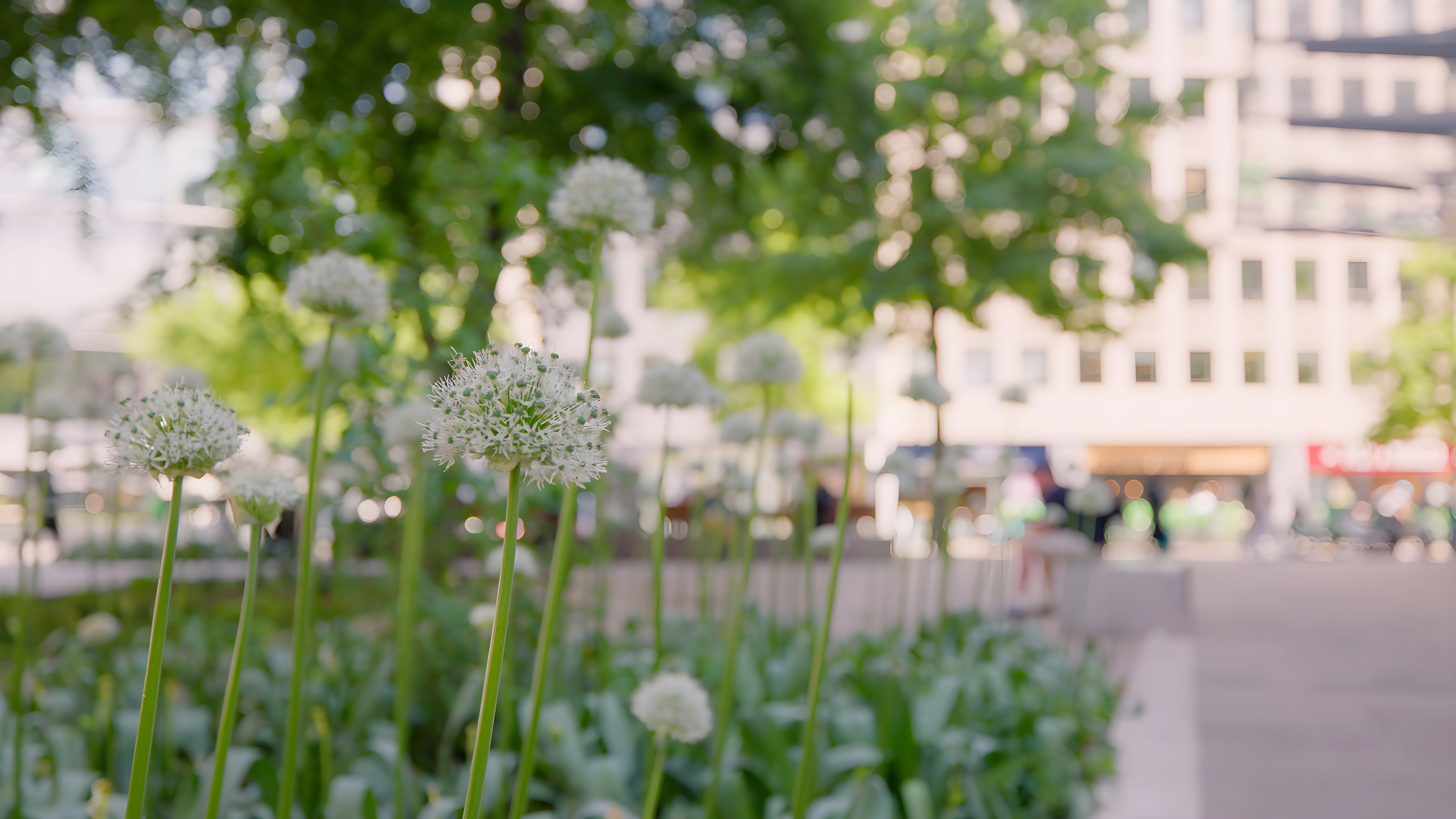




Our team supported the transformation of New Change Gardens, a once hard-edged and inaccessible space at the junction of Cheapside and New Change, into a welcoming, biodiverse and climate-resilient public garden overlooking St Paul’s Cathedral. As part of the City of London’s Climate Action Strategy and its “Cool Streets and Greening” initiative, this project forms a key early step in creating a network of resilient public spaces across the Square Mile.
The design had to respond sensitively to the site’s unique constraints, including two mature 60-year-old Beech trees, challenging surrounding levels, and the need to enhance visibility and safety while celebrating the site’s historic connection to C. Hoare & Co.’s “Golden Bottle” premises. By re-shaping levels and removing historic barriers, the space now provides fully accessible, step-free routes from all sides.
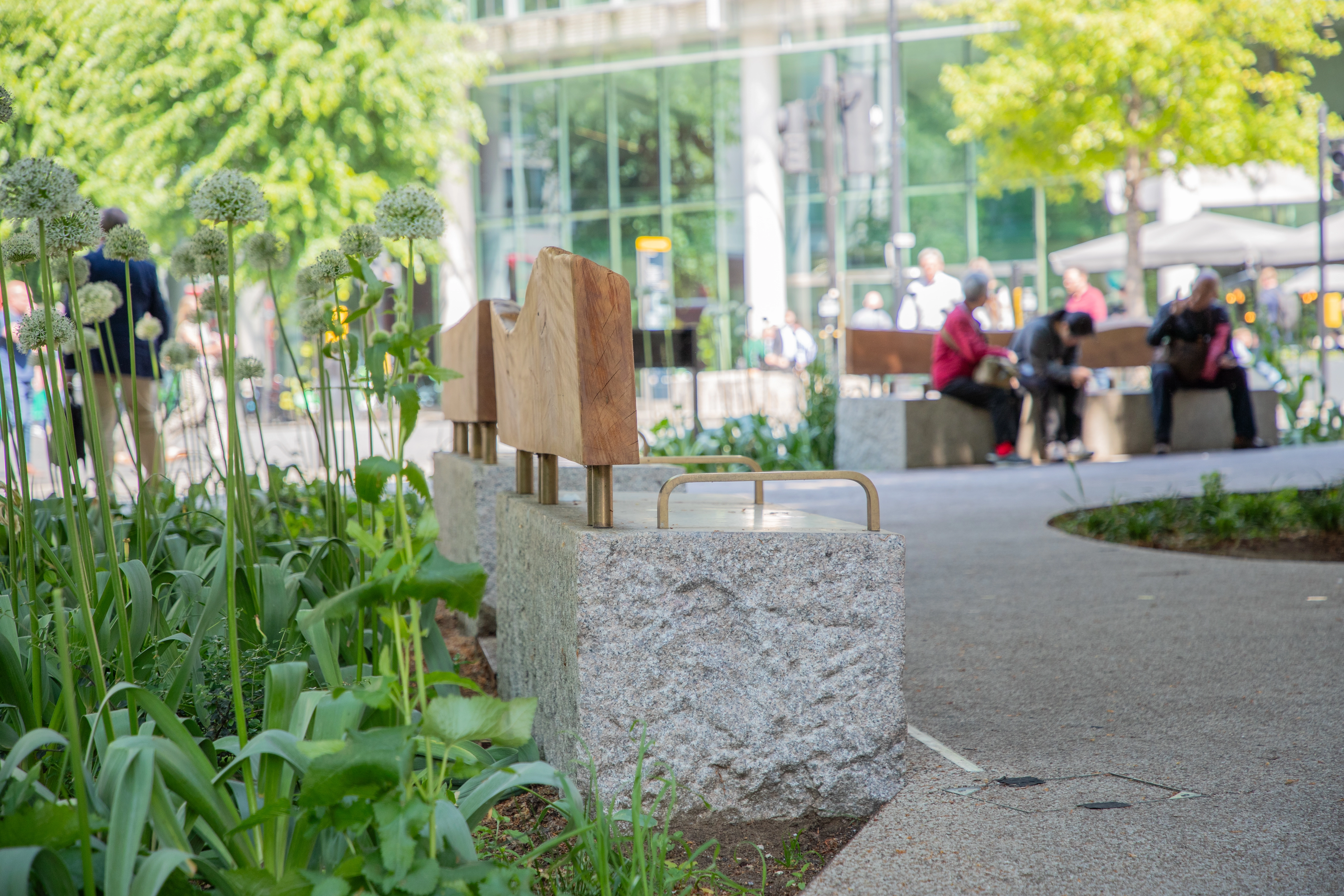
Our surface water strategy avoided overwhelming the existing trees by replacing hard paving with permeable resin-bound surfacing, allowing gentle infiltration, passive irrigation, and healthier root environments. This approach disconnects the space from the combined sewer, reducing annual flows by more than 195,000 litres and strengthening local flood resilience.
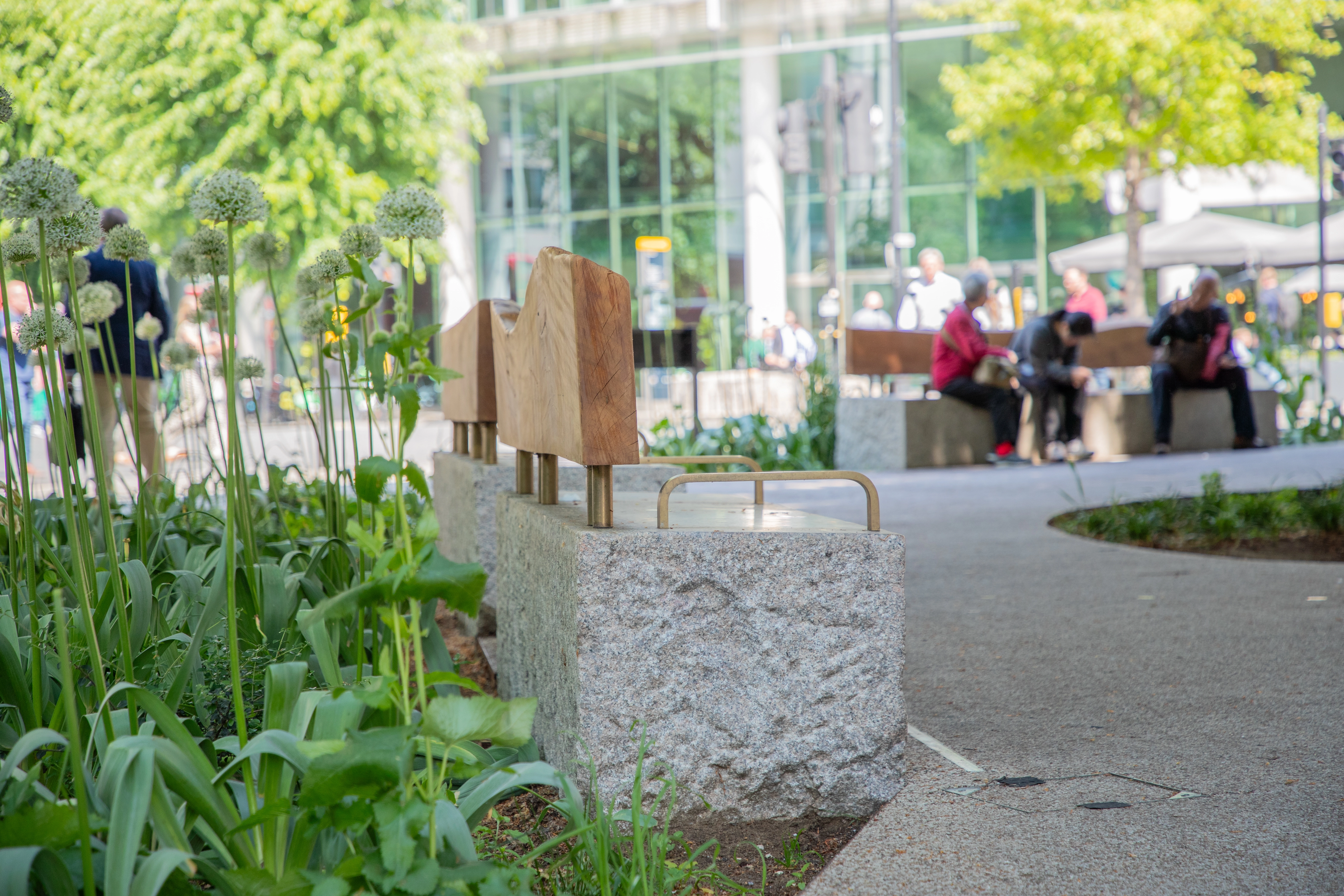
Sustainability and circular economy principles sit at the heart of the scheme. Reclaimed granite stones from Bazalgette’s 1875 Thames Embankment wall were repurposed as seating, avoiding new material use and eliminating the need for foundations. Their London Plane timber backs were crafted from salvaged fallen street trees, while climate-resilient perennial planting reduces water use and long-term maintenance.
The revitalised New Change Gardens now offers a greener, safer, and more inclusive space that honours its heritage while looking firmly to the future. It demonstrates how even small urban spaces can be reimagined as vital components of a more resilient, biodiverse city where people and nature thrive together.