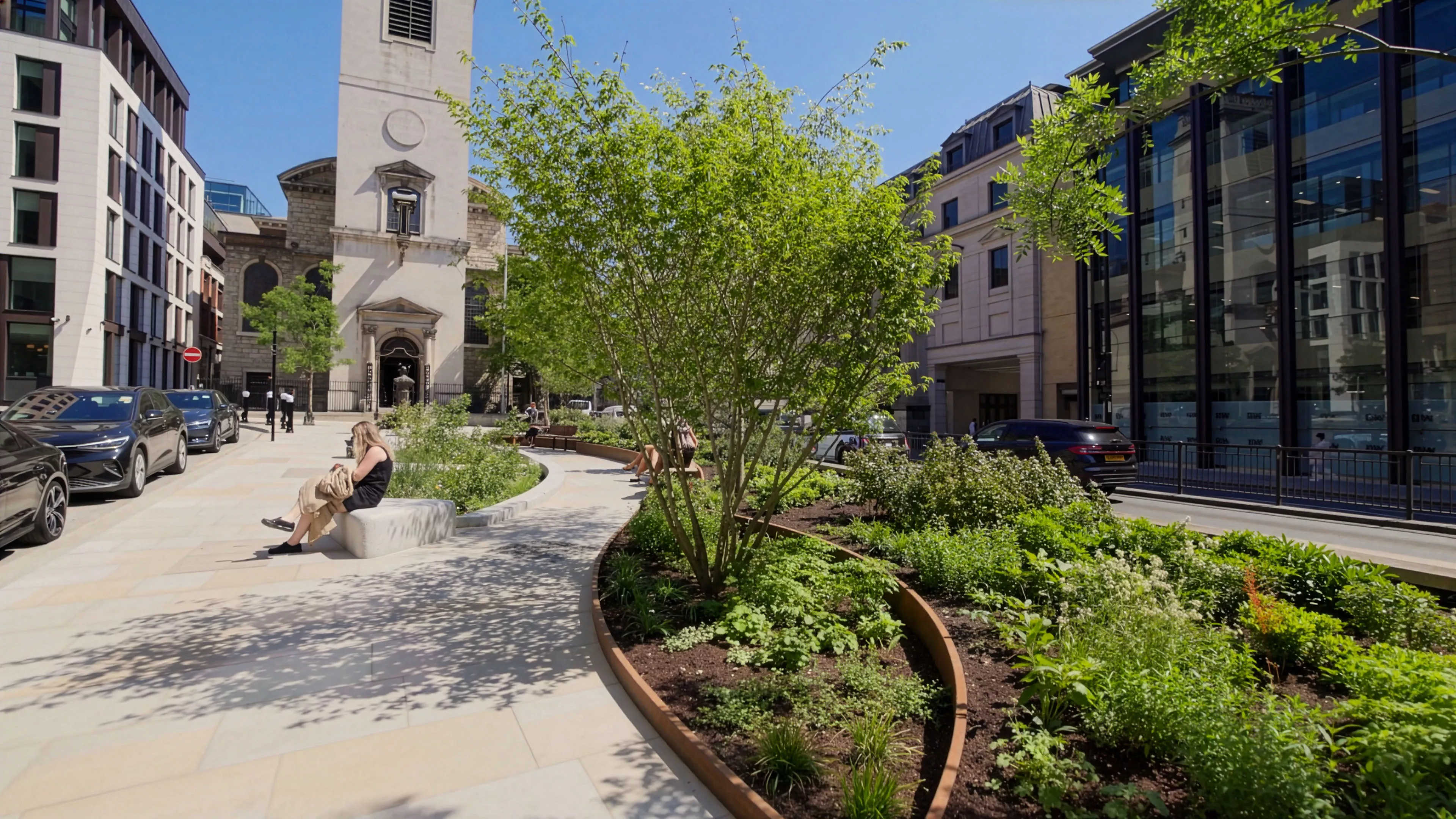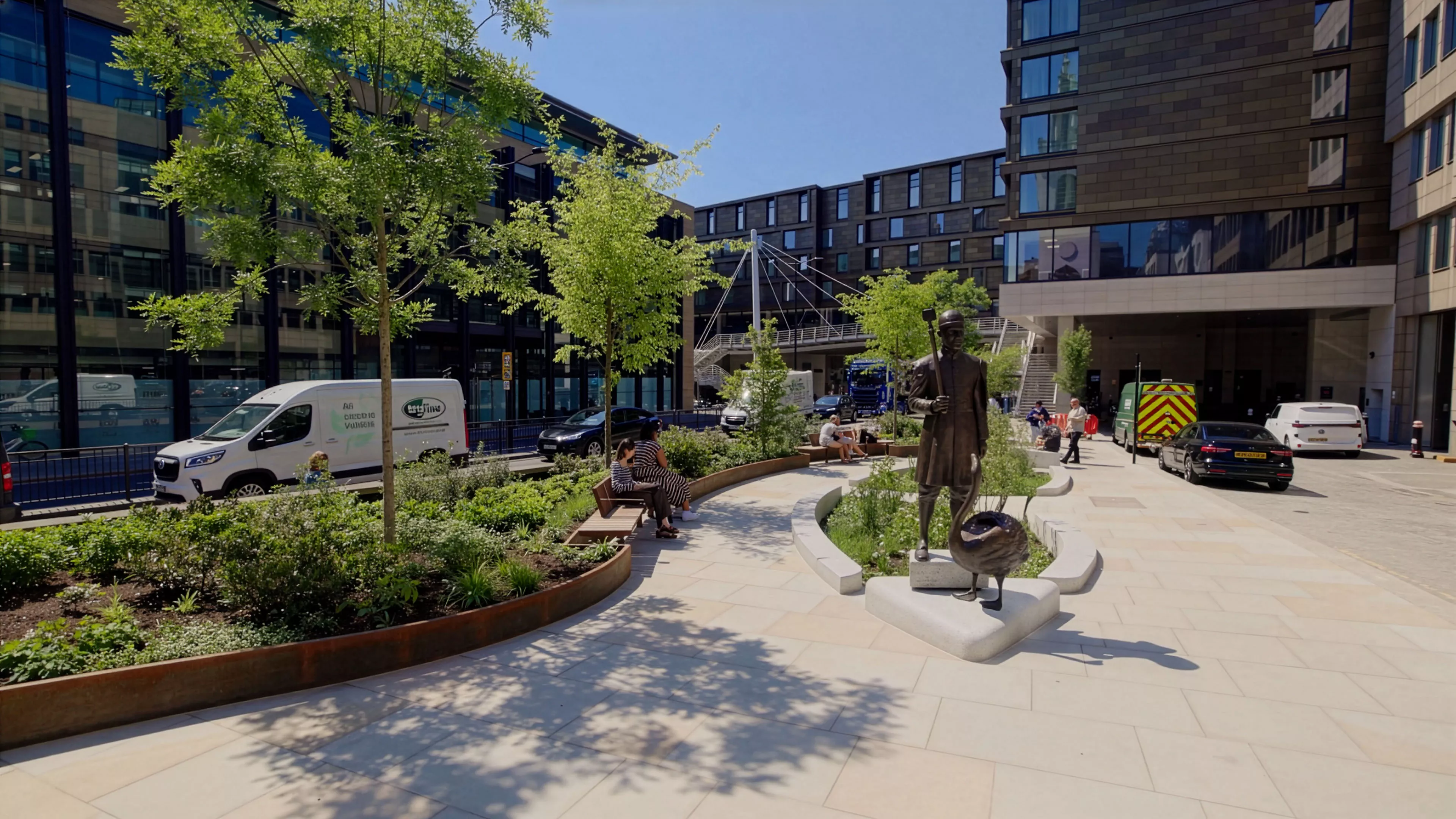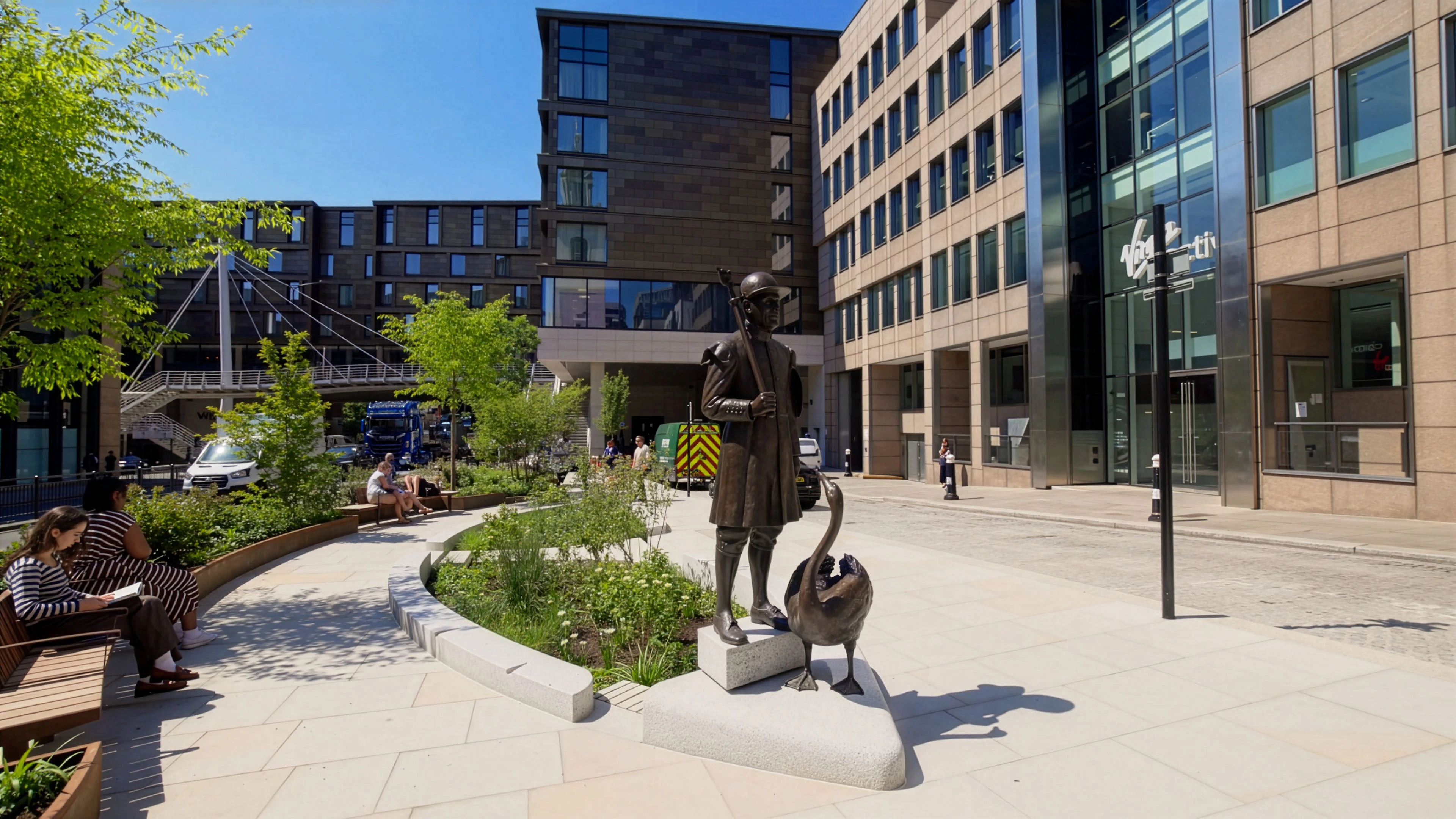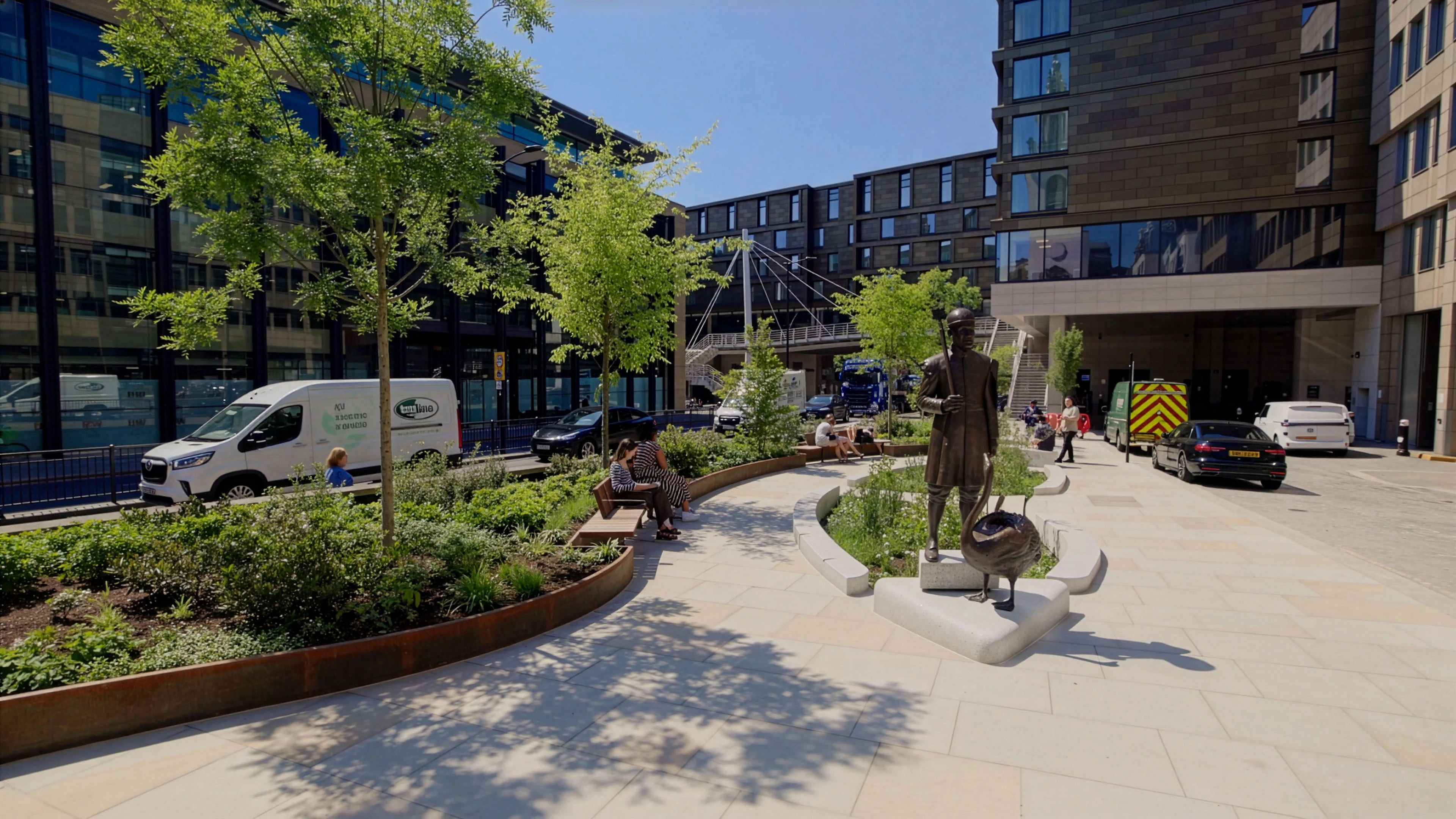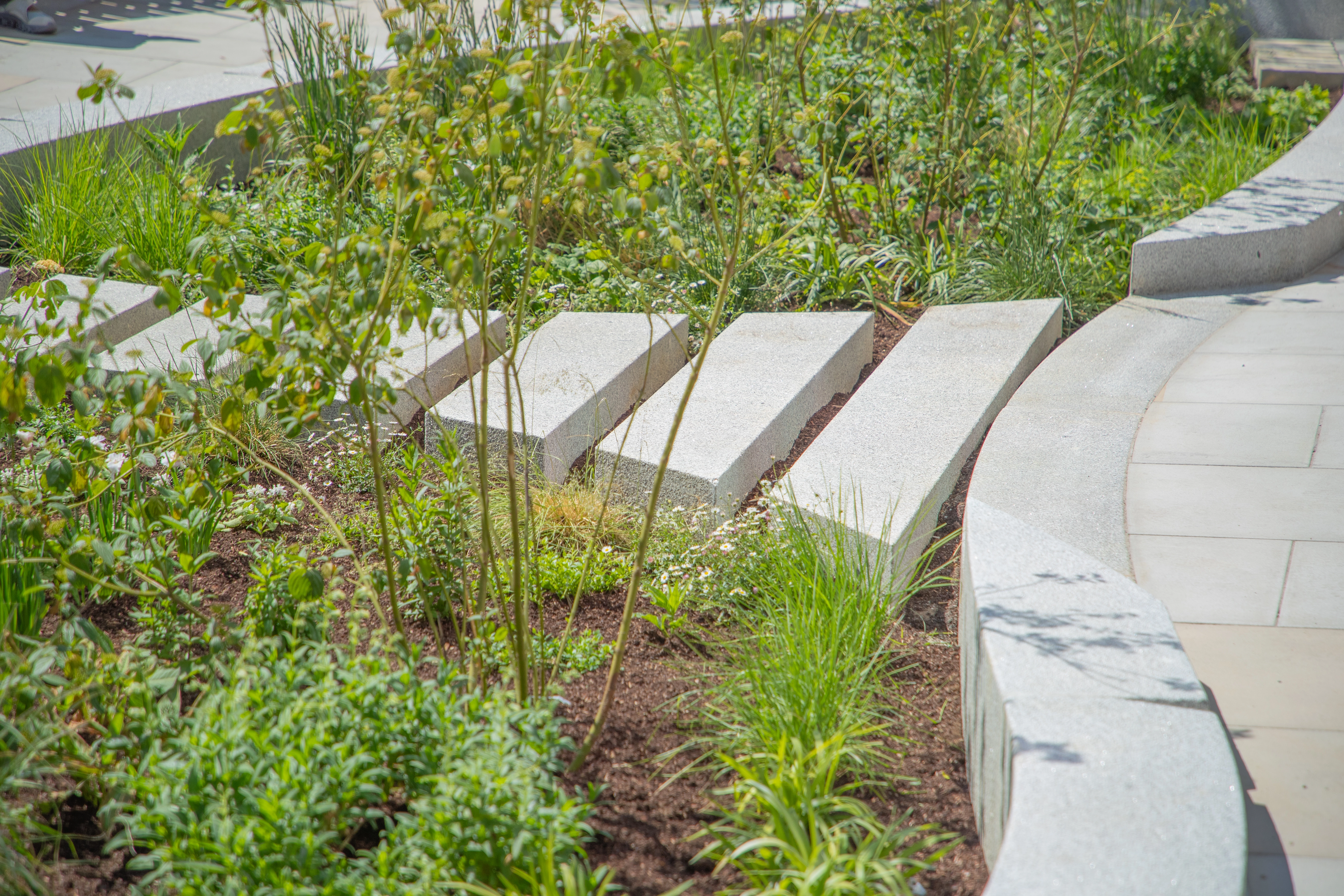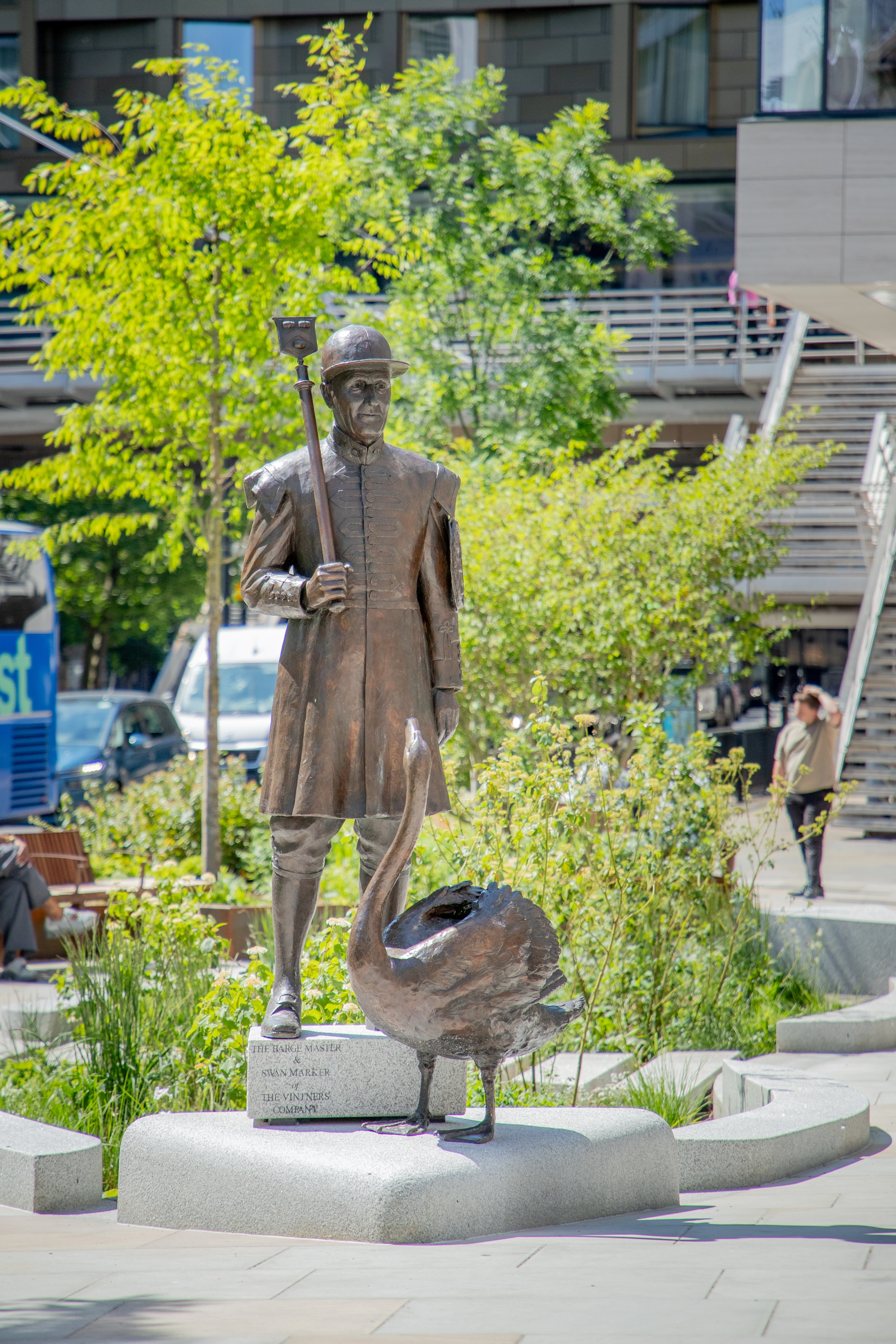


Our team supported the enhancement of Little Trinity Lane, a small but characterful street just south of St Paul’s Cathedral, transforming it into a more welcoming, biodiverse, and climate-resilient public space. As part of Phase 2 of the City of London’s Climate Action Strategy and its “Cool Streets and Greening” initiative, the project aims to strengthen the resilience of the Square Mile’s historic streets while enriching everyday experience for workers, residents, and visitors.
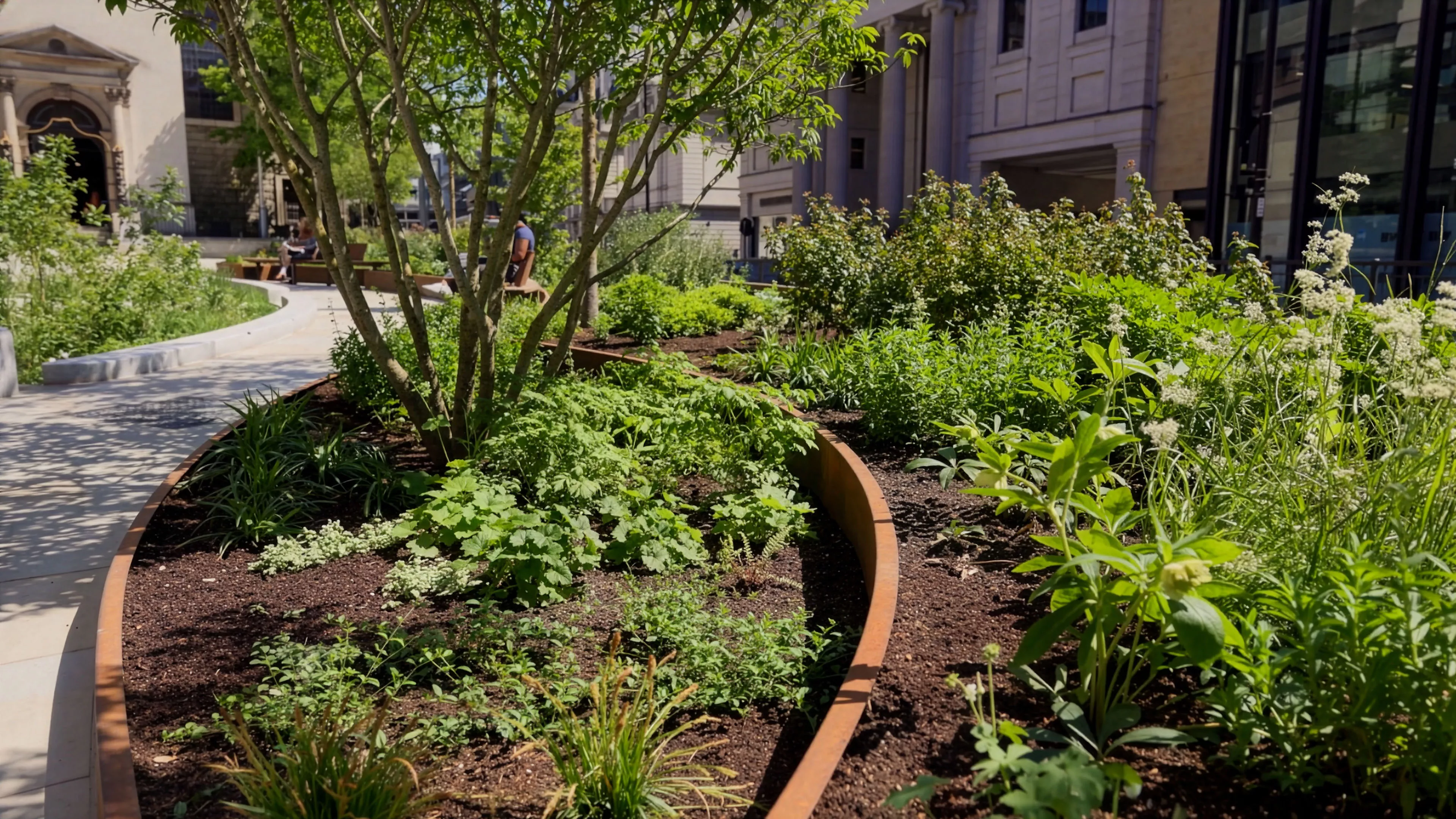
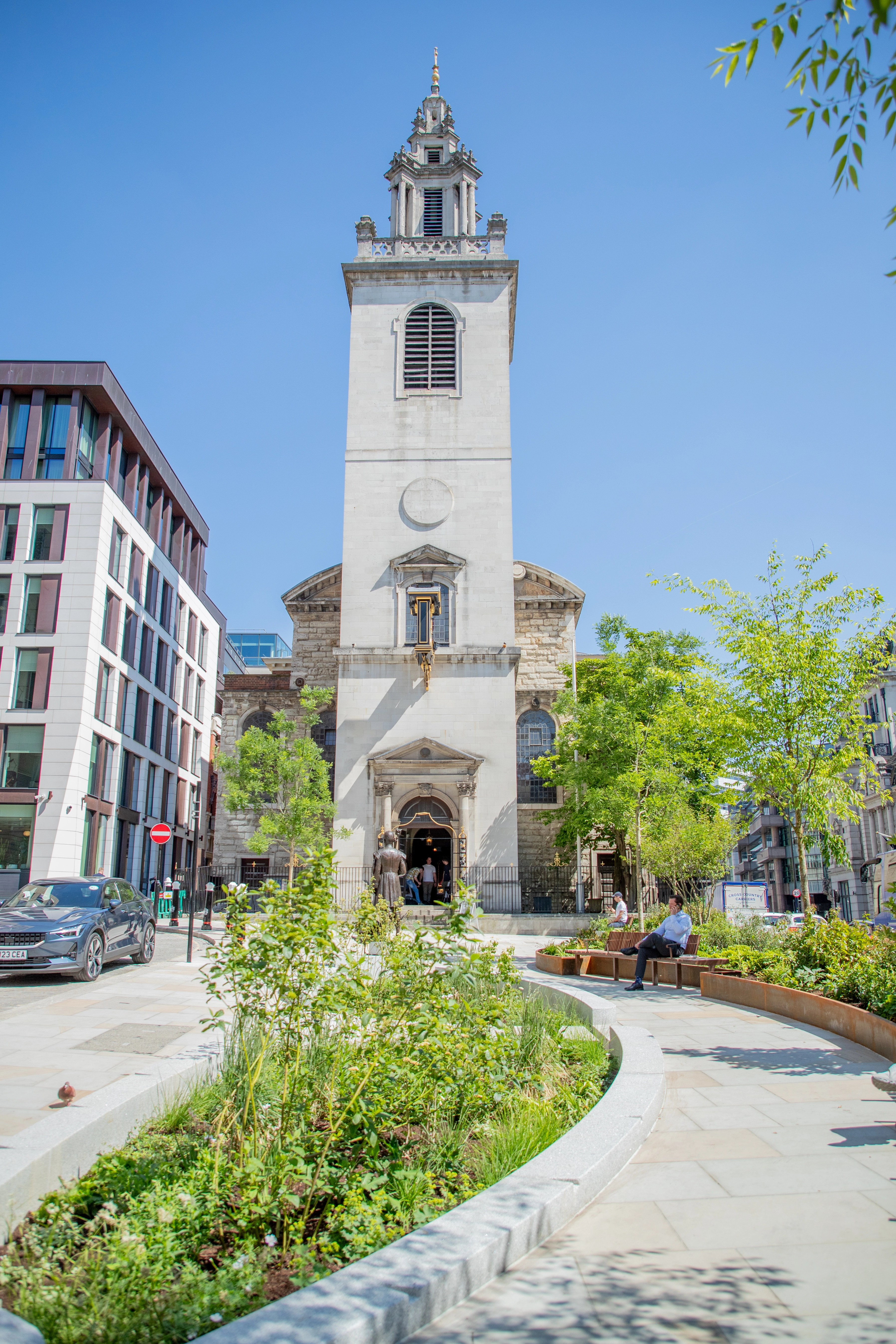
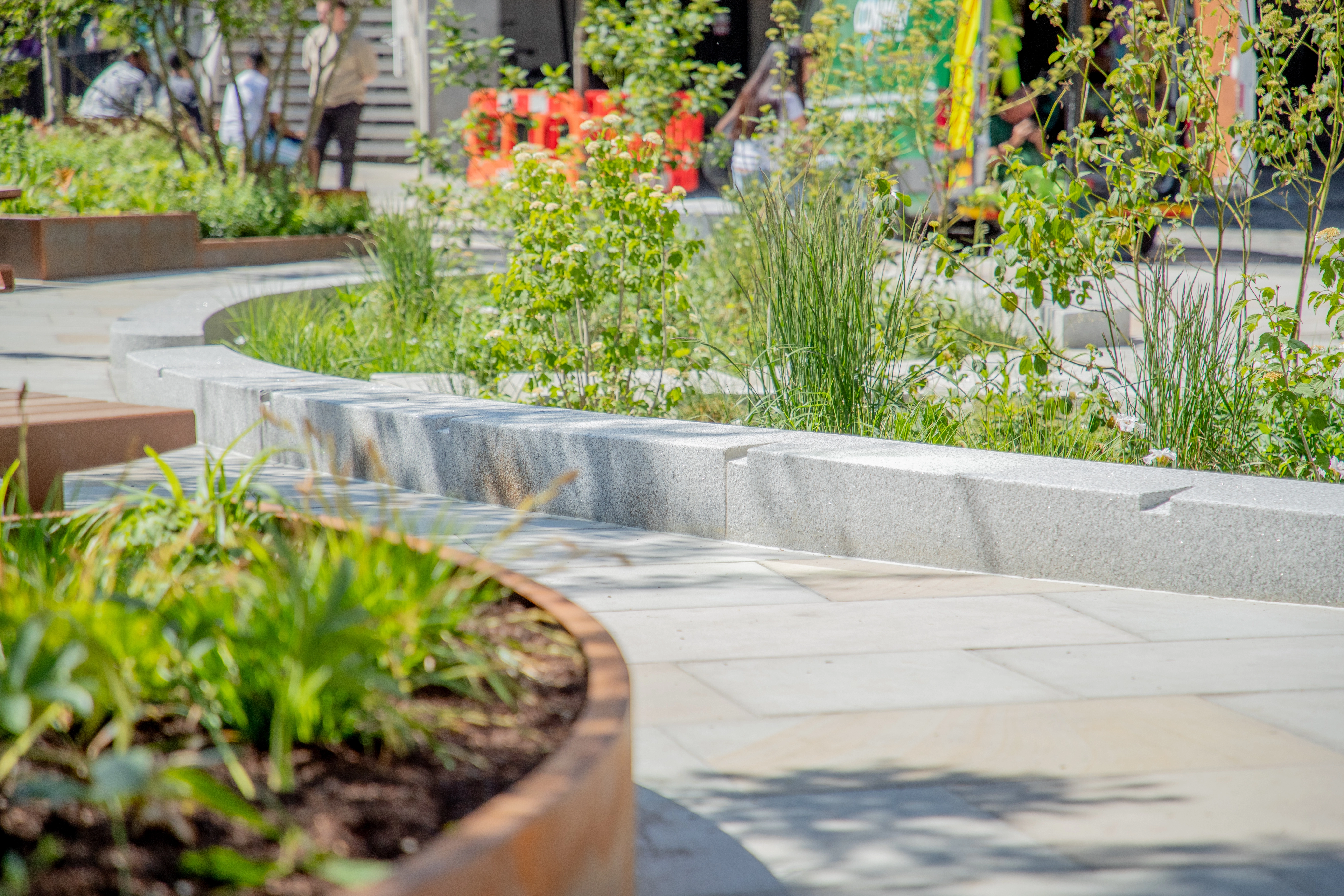
Set within one of the oldest parts of the City and overlooked by the Grade I listed St James Garlickhythe, the site’s steep topography and fast-flowing surface water presented significant challenges. The design responds with a central rain garden and enlarged planting areas that slow runoff, promote infiltration, and treat water as a landscape asset. By integrating multi-use, nature-based sustainable drainage the project disconnects the catchment from the combined sewer network, removing more than 120,000 litres of water annually, reducing local flood risk.
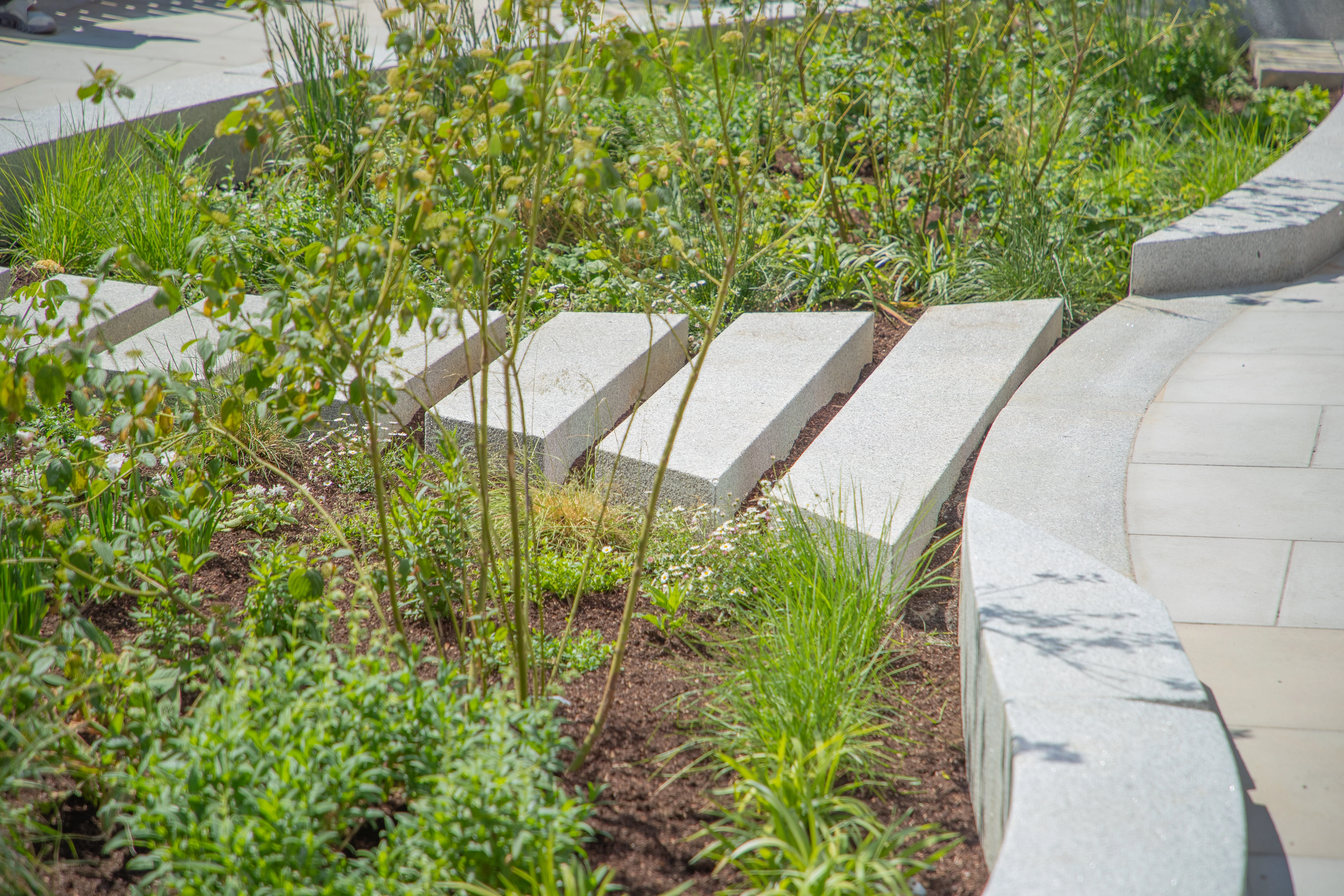
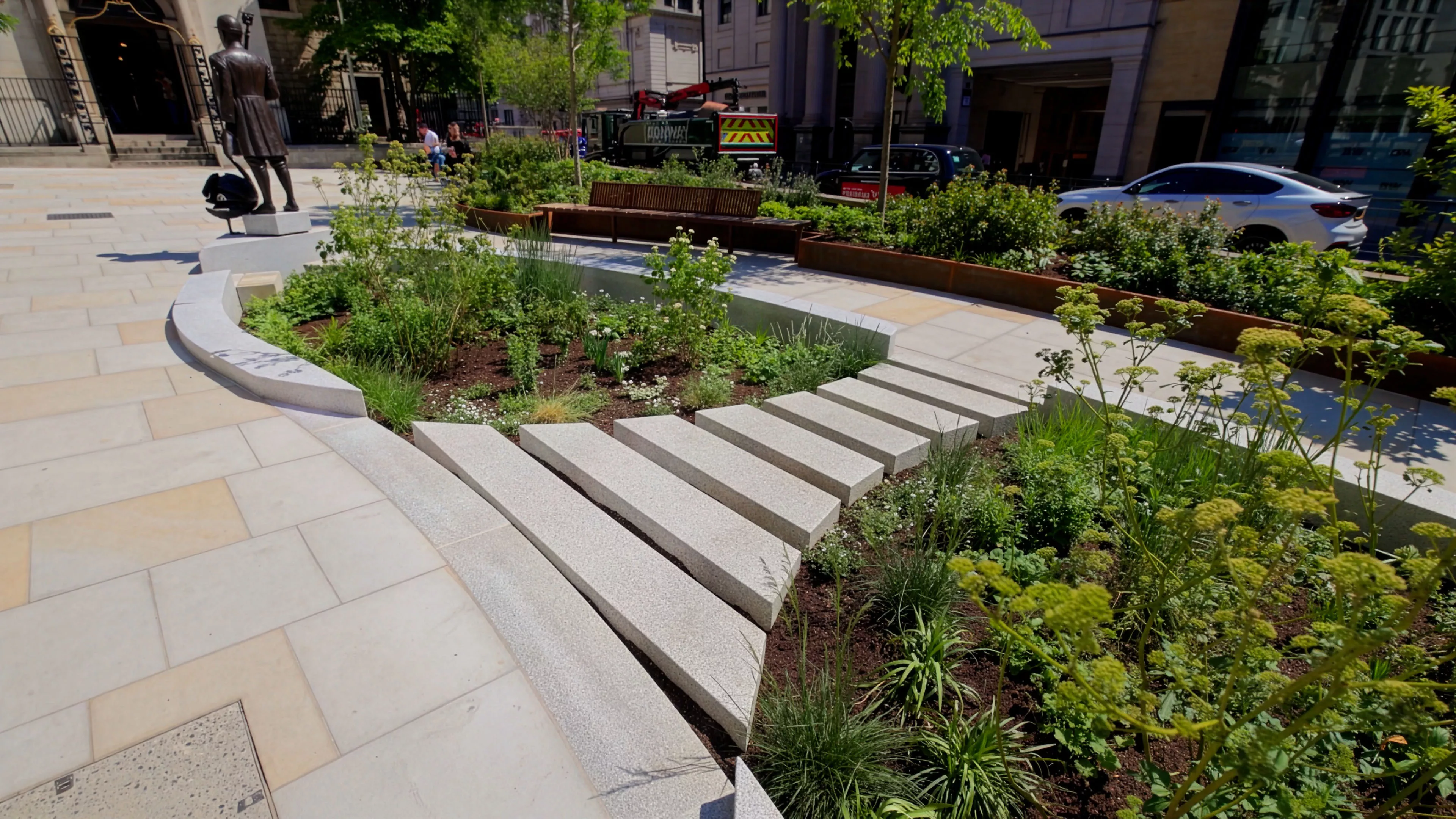
Climate-resilient planting, improved soil conditions, and new trees enhance biodiversity and long-term environmental performance, while playful stepping-stone routes and increased amenity space support public use and church events. Infrastructure has also been sensitively future-proofed, enabling further accessibility and greening improvements as funding becomes available.
Little Trinity Lane demonstrates how policy-led, sustainable design can elevate even the most compact urban streets into resilient, people-centred spaces. The project balances heritage and innovation, delivering understated interventions that improve climate resilience, enhance environmental value, and contribute to a greener, more liveable Square Mile.